

Why Choose Us
Professional team:We are a manufacturer specializing in bathroom products. Our main products are shower curtains, (including Polyester,,PEVA.PVC,VINLYand PE shower curtain etc) ,Microfiber towel,Table cloth,Shower curtain rod, Apron.and many other products for daily use. We've been engaged especially in this field about 20 years. We also have independent export right, and this can produce, customs clearance, export one-stop service.
Quality control:We have built a professional QC team to accurately inspect every raw material and every process of production.Moreover, the factory has introduced fully automated machines, which have improved the efficiency of shipment while ensuring product quality
Attractive design:Every month, our design team will do pattern design based on the lastest fashion trend.
Rich experience:We believe the operation principle of quality first, honest business and mutual benefits' all the time. Now we have established long-term business relationships with our customers in Europe, the USA, Australia, etc. We constantly promote technical innovation and develop new products to satisfy our customers' needs for better products.
What is a Microfiber Cloth
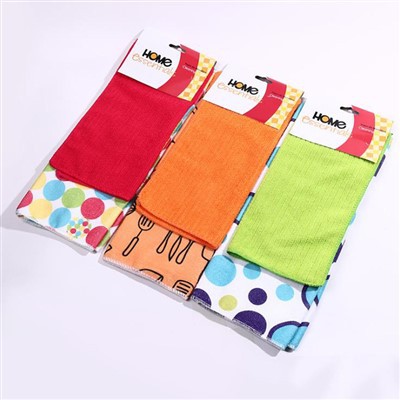
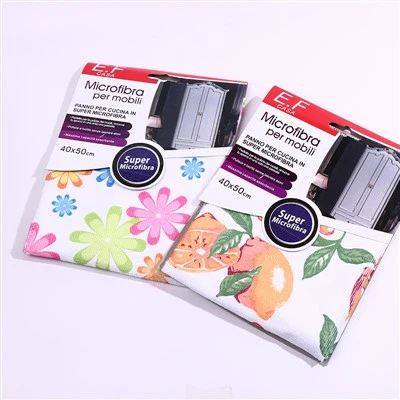
A microfiber cloth is an advanced cleaning tool made from ultra-fine synthetic fibers (typically polyester-polyamide blend). Its split fibers create a static charge that attracts dust, dirt, and grease without chemicals. Key features:Super absorbent (holds 7x its weight in water),Lint-free & scratch-free (safe for delicate surfaces),Antibacterial (traps bacteria when damp),Reusable (500+ washes with proper care),Ideal for glass, electronics, cars, and household cleaning. Eco-friendly alternative to paper towels!
-

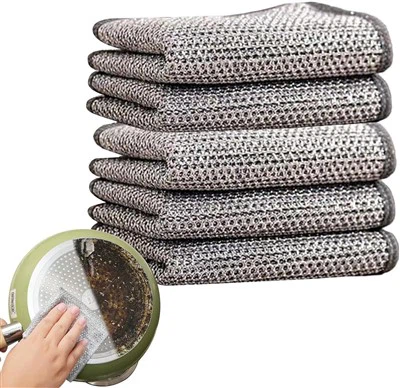
Double-Layer Silver Fiber Cloth – Premium 20x20cm microfiber cleaning cloth (5pcs/set). Non-toxic, skin-friendly & highly durable. Effortlessly removes kitchen grease without residue, dries fast &
Add to Inquiry -
Reusable Multi-usage Cleaning Cloths
Upgrade your cleaning with our reusable multi-usage cleaning cloths!Super-absorbent microfiber meets scrub-power silver fiber for unbeatable cleaning.Gentle on surfaces, tough on grime - perfect for
Add to Inquiry -
Single Layer Wire Cleaning Cloth
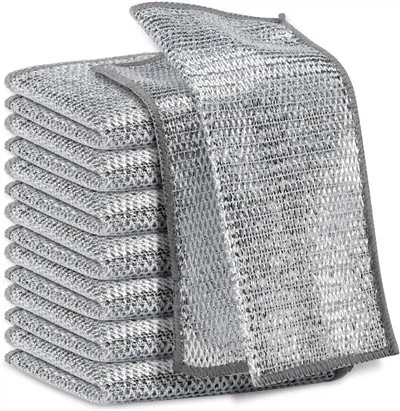
Upgrade your cleaning with our single layer wire cleaning cloth!Strong scrubbing power, anti-greasy, and reusable—just rinse and air dry.Eco-friendly material, packed in OPP bags (10pcs/set).Low MOQ,
Add to Inquiry -
Chenille Double Sided Cleaning Gloves
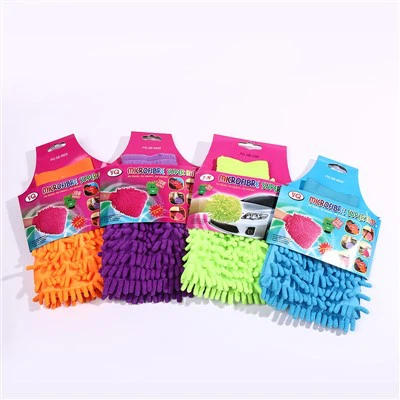
Upgrade cleaning with our ultra-soft yet heavy-duty gloves!Abstract stylish design meets double-sided functionality—smooth for dusting, textured for scrubbing.Super absorbent & scratch-free, perfect
Add to Inquiry -
Fish Scale Microfiber Cleaning Rag
Ultra-fine fiber fish-scale microfiber cleaning rag designed for superior absorbency & scrubbing power!The textured scale pattern lifts dirt effortlessly,while the 30 x 30 cm size (custom sizes
Add to Inquiry -
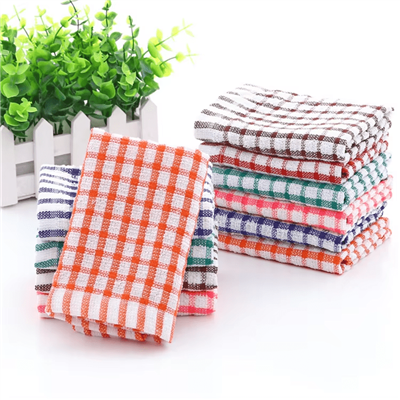
Classic grid-pattern cotton towels, strong & super absorbent for tough cleaning.Eco-friendly, reusable, lint-free.Various sizes & packaging options. Low MOQ & wholesale support available.
Add to Inquiry -
Printed & Plain Wipes Microfiber Cleaning Cloths
Upgrade with our solid & printed wipes microfiber cleaning cloths—more affordable!Super absorbent strong stain removal reusable and multi-functional.The Moq is 10pcs ready stock and high
Add to Inquiry -
Printed Nanoscale Cleaning Cloth
Stylish Printed Nanoscale Cleaning Cloth: Soft absorbent with vibrant designs.Safe quick-drying and great for cleaning. Low MOQ (10 pcs) ready to ship!Ideal for kitchen clean car wash cleaning cloth.
Add to Inquiry -
Magic Super Absorbent Towel for Cleaning
Powerful cleaning cloth superior stain removal & ultra-absorbent!It's a reusable Eco-friendly magic super . Low MOQ is available size is 30 x 30 cm.Perfect household cleaning product for kitchen!
Add to Inquiry -
Striped Microfiber Easy Clean Cloth
Stylish Striped Microfiber Easy Clean Cloth.Trendy striped design in multiple sizes.Super absorbent,scratch-proof and lint-free.Eco-friendly & reusable,Bulk/retail packaging options.Low MOQ:50pcs &
Add to Inquiry -
Super Absorbent Car Drying Towel
Trendy Super Absorbent Car Drying Towel– Upgrade your cleaning with our super absorbent car drying towel! Designed for heavy-duty absorption and scratch-free cleaning.The Dishcloth is eco-friendly,
Add to Inquiry -
Export stripe factory non-oil multi-functional. microfiber rags lazy dishwashing cloth . cleaning cloth dishwashing cloth
Add to Inquiry




Benefits of Microfiber Cloth
Effectively catches microbes
Microfiber is a material that is much better than cotton when it comes to capturing bacteria. This is a feature that is invaluable when trying to clean kitchen counters, the flooring, or something else.
Attracts more dirt
Thanks to the net-like layout of the fibers in a microfiber towel, they are great for catching or picking up all types of dirt, dust, and debris. Even though a regular cotton towel can be used, it will essentially just push the dirt and dust around the surface. With a microfiber towel, it is picked up.
Offers a superior level of reusability
While microfiber is not as strong as some of the other types of cotton used today, it does offer a high level of reusability. Microfiber does not deteriorate with washing, which means that they last much longer. In fact, it is expected that you can wash a microfiber towel between 400 and 500 times before it will have to be replaced.
Extremely absorbent
Today’s microfiber towels are much more absorbent than a traditional cotton towel. However, there are some cotton types, such as the Egyptian cotton towel, that may give it a bit of competition. While this is true, microfiber towels still offer a high level of absorbency.
Fast to dry
A microfiber towel is going to provide must faster drying results than cotton. However, this is going to depend on the type of cotton towel used.
Types of Microfiber Cloth

All purpose cleaning cloths
All Purpose and Multi-Surface Cloths are generally what comes to mind when you think of a microfiber towel. Just like the name indicates, they’re good for all purposes and safe for any surface. They have a traditional terry type weave and plenty of surface area for dry dusting, wiping up spills, and general cleaning.
Glass cleaning cloths
Microfiber glass cloths are a knit microfiber product. They are specifically designed for removing streaks and smudges from smooth, reflective surfaces like mirrors, windows, electronic screens, even stainless steel. They’re generally used as a drying cloth after the surface has been cleaned to provide a shine like brand-new.


Textured cloths
Microfiber cloths with a textured weave, like a waffle towel, provide extra power for tasks like scrubbing or drying. For scrubbing, the uneven pattern in the weave help create more friction without damaging a surface so you use less time and energy cleaning. For drying, the high-low construction allows liquid to be picked up in the higher sections and then it wicks away to the lower sections which leaves a dryer surface of the towel.
Polishing cloths
Polishing cloths have a weave with a longer knap that is cut and has a higher pile than an all-purpose terry weave cloth. Polishing cloths are made with a coral fleece microfiber for an ultra-plush and soft feel and look. They’re designed for applying and removing polishes on delicate surfaces like cars and metal. They're excellent for keeping jewelry and silver looking their best.

Material of Microfiber Cloth
polyester
In cleaning products, microfiber can be 100% polyester, or a blend of polyester and polyamide (nylon). It can be either a woven product or a non woven product, the latter most often used in limited use or disposable cloths.
Chenille
Chenille microfibre features thick, finger-like protuberances of fibre held together by a thin base fabric. Commonly used to make sponges and car wash mitts, chenille microfibre is used almost exclusively for cleaning applications.
Suede
Designed to be soft like suede, this type of microfibre has a remarkably low pile. It is ideal for cleaning glasses lenses, and many types of apparel, accessories, and upholstery feature suede microfibre.
Terry
Terry is one of the most common types of weaves for towels, and many microfibre towels feature terry weaves.
Application of Microfiber Cloth
Cleaning windows:Microfiber fabrics are perfect for cleaning windows since they are delicate and won't scratch the glass. They can likewise be utilized to eliminate fingerprints and smears.
Cleaning mirrors:Microfiber fabrics are likewise perfect for cleaning mirrors since they can eliminate streaks and haze.
Cleaning floors:Microfiber fabrics can be utilized to clean a wide range of floors, including hardwood, tile, and tile. They can likewise be utilized to eliminate soil, residue, and grime.
Cleaning furniture:Microfiber materials can be utilized to clean a wide range of furniture, including wood, cowhide, and texture. They can likewise be utilized to eliminate residue, soil, and stains.
Cleaning apparatuses:Microfiber fabrics can be utilized to clean a wide range of machines, including stoves, coolers, and dishwashers. They can likewise be utilized to eliminate oil, grime, and food particles.
Cleaning vehicles:Microfiber fabrics can be utilized to clean all pieces of a vehicle, including the inside, outside, and windows. They can likewise be utilized to eliminate soil, residue, and grime.
Cleaning gadgets:Microfiber fabrics can be utilized to clean a wide range of hardware, including PCs, TVs, and phones. They can likewise be utilized to eliminate fingerprints, residue, and grime.
Cleaning washrooms:Microfiber fabrics can be utilized to clean a wide range of surfaces in the restroom, including sinks, latrines, and baths. They can likewise be utilized to eliminate cleanser rubbish, mold, and microorganisms.
Cleaning kitchens:Microfiber materials can be utilized to clean a wide range of surfaces in the kitchen, including ledges, burners, and stoves. They can likewise be utilized to eliminate oil, grime, and food particles.
Cleaning pets:Microfiber materials can be utilized to clean a wide range of pet hair and dander. They can likewise be utilized to eliminate soil, residue, and grime from pet beds and toys.
Process of Microfiber Cloth
Microfiber splitting: This process consist in altering the fibers by increasing the pH in large drums. By subjecting the fabric to an alkaline solution, the woven yarn is splitting, thus significantly increasing its contact surface.
Dyeing: Immediately after splitting and sometimes as part of a combined operation, the fabric is placed in large vessels, together with high quality pigments. The vessels are then pressurized and heated. Most vessels are steam heated, some are electric. The dyeing process ends with a rinsing cycle. All pigment residues and chemicals are collected and neutralized in large decantation tanks.
Drying and tensioning: At the end of the dying process, the microfiber fabric is placed on a long horizontal machine which has a dual purpose. The fabric is running through the entire length of the machine, about 200 feet, to keep it at a constant tension while drying, which is very important to maintain the proper geometrical characteristics of the fabric, all the way to the finish product.
Cutting: Rolls of fabric are unrolled in layers on top of one another, either by hand, or using an automatic machine. Depending on the type of fabric and the stability of the weave, there can be up to 150 layers. The top layer is then marked at specific intervals and a grid template drawn. The last step of this process is to cut at once through all of the layers with a vertical fabric blade.
Sewing: Individual pieces are surged, by adding a piping material and sewn on their entire perimeter. During this step a sew in label is inserted in the surging. The purpose of the label is to display the brand name, composition, sometimes care instructions and other information useful for the end user.
Pigtails removal: When surging is done by hand, the operation of sewing around the towel is very fast. The operator needs to make sure that the entire towel is properly sewn and can't stop exactly at the corner. Usually the surging extends for an inch or two beyond the corner, creating a "pigtail". The surplus of piping around the towel is cut with a hot wire.
Final Inspection: A visual inspection makes the final determination if the product is suitable for packaging or not. If yes, bundles corresponding to the sell unit pack quantity are prepared, if not the individual piece is removed from the line and its sew in label cut off, a clear indication that the product is not suitable for retail as new.
Packaging: Depending on the product, the sell unit could be packed in a clear polybag, a polybag with graphics, a clam shell, a cardboard box, a sleeve, the combinations are endless. A group of sell units is then placed into master cases to protect the product as well as to facilitate the transportation process.
How to maintain Microfiber Cloth
Washing microfiber cloths
When washing microfiber cloths, avoid harsh soap, fabric softener or detergent with laundry additives, including fragrances and fabric conditioners. These coat the fibers of the cloth and make them less effective for cleaning. Lightly dusty or dirty microfiber cloths can be hand-washed.
Drying microfiber
Microfiber cloths dry quickly, whether you choose to air-dry or machine dry.
Air-Drying:Shake out the microfiber cloths and hang to dry in direct sunlight.If hanging indoors, make sure you hang them in an area with good air circulation.
Machine Drying:
Thoroughly clean out the dryer lint trap both before and after drying microfiber cloths. A dirty trap can spread dryer lint and deposit it on the microfiber, damaging the fibers.Set the dryer to a low heat or an air-dry cycle.
Maintain your microfiber cleaning cloths
To maintain your microfiber cloths, shake them after use to dislodge dirt, then rinse thoroughly. Store microfiber cloths together, separate from other types of cleaning cloths or materials. When using microfiber cloths, avoid cleaning chemicals. Most microfiber works better with water only. If you do want to use chemicals, use very small amounts. Do not iron microfiber cloths; excessive heat can melt the fibers.

CertificationsProducts Description


Our Factory
We believe the operation principle of quality first, honest business and mutual benefits' all the time. Now we have established long-term business relationships with our customers in Europe, the USA, Australia, etc. We constantly promote technical innovation and develop new products to satisfy our customers' needs for better products.


Frequently Asked Questions Bathroom Non Slip Mat
As one of the most professional microfiber cloth manufacturers and suppliers in China, we're featured by quality products and good service. Please rest assured to wholesale cheap microfiber cloth made in China here from our factory. Also, customized service is available.
